Instant Memory Machine

My wife, daughter and I just got home from 10 days in Florida. We did the Disney and beach thing. It’s okay if you didn’t even realize I was gone. I didn’t tell you. I didn’t really want you to know.

I don’t post updates or vacation pictures on Facebook or Twitter when traveling. Part of this is a safety habit meant to prevent thieves, villains and sundry unscrupulous friends of friends of friends from targeting my house for mischief. It happens. Or, I think it happens. Or, if it doesn’t actually happen, it feels like something that should happen if it doesn’t. At the very least, it is something that is certain to happen now, since you will be watching my posts for pictures or absence of pictures. There’s no winning.

When I am traveling, you won’t see the picture of my 8 year old daughter waiting patiently at the airport, looking very much the practiced air traveler with her headphones, slightly bored expression and jug of chocolate milk. You won’t see the picture of me hanging with Rafiki or the dozen or so selfies of my wife and I smooshing face in some not-well-lit spot. You won’t see these things because I won’t post them yet. These are my memories. I want to keep them to myself a little longer.

Don’t worry. I will share them. I love to share them. I just get weary of the constant impulse to share pictures as evidence of Good Things happening while the Good Things are actually still happening. I want you to know something about my life but I don’t really want you there with me. Or, perhaps, I have it backwards. I want you with me but, when I share a picture of something that is happening while it is happening, it takes me away from the moment just a little. When I am sharing a thing to bring you all with me, I am making myself a little less there myself. I am a little less aware. I participate in that moment just a little bit less and and it belongs to me just a little bit less.

The ease of taking and sharing images makes is harder to protect the lines of genuine experience. Social networks exacerbate the situation, but they do not cause it. You may recall die hard photographers of a certain generation who would capture a moment on film and then miss out on the next several while gently fanning that precious scrap of self-exposing film called Polaroid.

When my wife and I married almost twenty years ago, my uncle rushed his photos of our ceremony through One Hour Photo so he could share the pictures of the ceremony that just happened at our reception.

I call this phenomenon the Instant Memory Machine. It is a very human thing and isn’t caused by technology, though I think our technologies increase potential for our actual experiences to get overrun by the documents of those experiences.

And so, kind friends, I ask that you wait. I’m going to keep these memories to myself just a little bit longer. I’m going to wrap myself in them like a suit of armor for my first day back to work. I’m going to marinate in them until I feel soft and well-saturated by the fullness of them. And just when the memory starts to settle, I will push them out into the world for the likes and the faves and the comments which are an important part of the Instant Memory Machine, that help me construct the narrative of who, what, when, where and why. The experience will be over and we can create something new out of it together. We can start the reminiscing, the storytelling and take the best parts of it all and latch them together to make something shared and useful.

But, still, there is that urge. The desire to share even just a little. Because somewhere inside of me remains the feeling that perhaps none of it really happened unless I have made evidence and shared evidence with someone else. And now, I can’t get this idea out of my head and so, not because you asked, but because it is my very human nature and I feel a kind of responsibility to feed the Instant Memory Machine. Just a little. Just this one. For now. Just so you can know I didn’t make this up. This actually happened. I was there. I wanted you there with me. I came back to bring a bit of it to you.
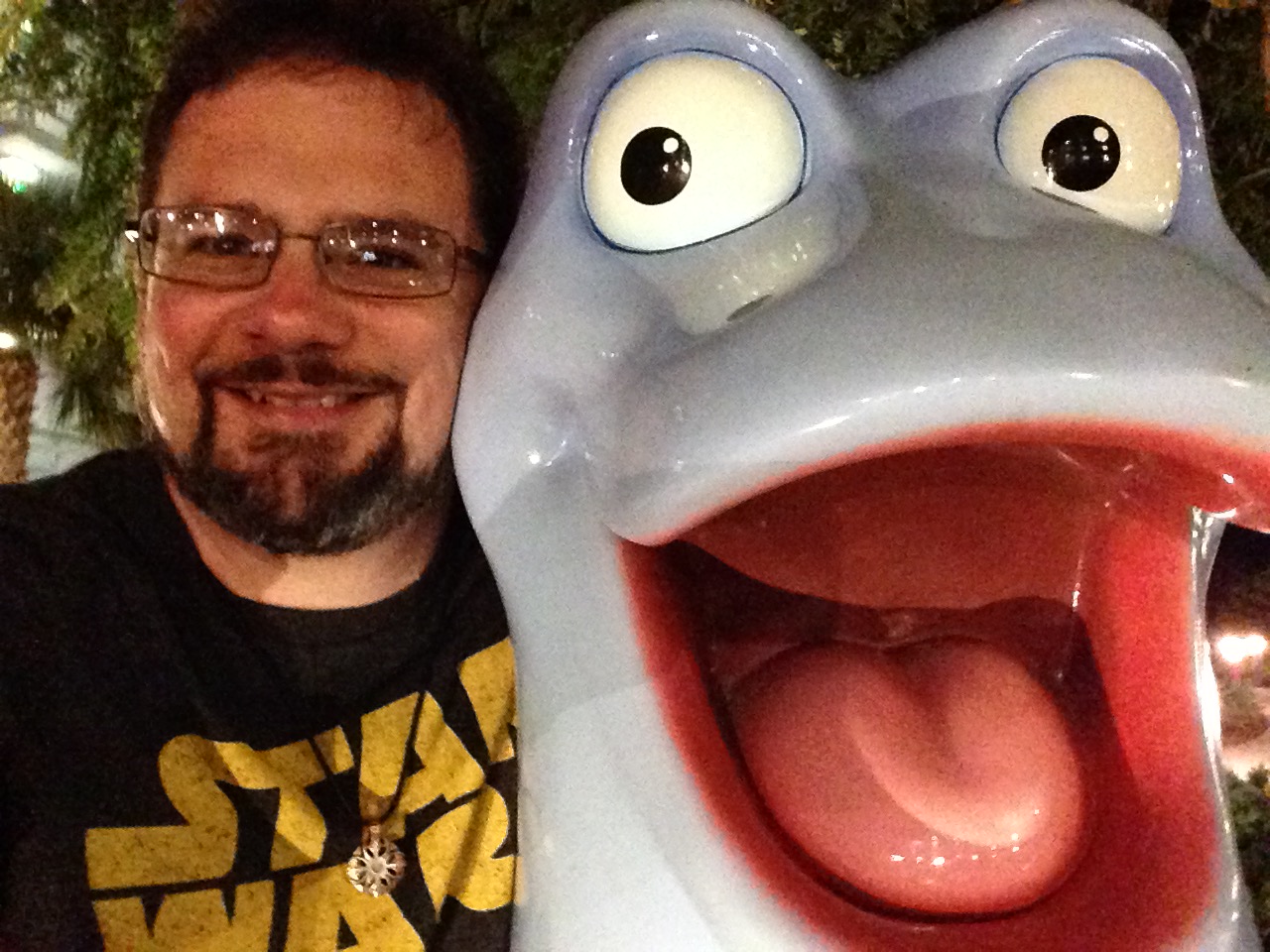
IMG_9379

Polite Dinner Conversation

Tonight at dinner, I overheard two couples talking about Important Social Issues. I’m a writer, so eavesdropping isn’t really considered rude. It is actually a kind of professional obligation. The couples were talking about gay marriage and transgender identity. What struck me wasn’t the content of the couples’ conversation. I was amazed, rather, by the tone — friendly, civil and challenging. The privileged white upper-class man was being rude and sarcastic. The privileged white upper-class woman answered his sarcastic jibes with earnest, polite, unapologetic replies. She answered every joke with a “Imagine how you would feel if…”

The conversation had a pleasant, enjoyable rhythm. They were rising and falling against one another’s reply. There was thoughtful, quiet spaces in-between each retort. There was civility. There was respect. There was friendship.

The conversation captured me not for its academic merits or it rhetorical riposte.  The conversation caught my attention because it felt so unusual. Somewhere along the way, disagreements have become forbidden. When friends disagree with one another, we keep it to ourselves. We learn to avoid the discomfort of discord. We pretend that silence is agreement, that tranquility is concert. And yet we once were a country built on public debate, a great laboratory for ideas, where a kind of intellectual survival of the fittest sussed out the best, most powerful ideas through argument and disagreement.

I don’t want to make too much of it. Maybe it is just me. But I find myself increasingly talking to people who agree with me, nodding my head to acknowledge things I myself might have said.

And then I see how other’s practice constructive disagreement in such a polite, friendly and constructive way. And I see how important this dinner time conversation might become.

In a few weeks, the United State Supreme Court will announce decisions on some majorly Important Social Issues. The decisions will help establish or reinforce legal and political precedent for how we want to live. The decisions will impact social norms and will help govern the ways we organize ourselves inside our communities. And yet, for all the importance of the Supreme Court decisions, I can’t help thinking that it won’t be enough. The future won’t be made by legal pronouncement or proclamation anymore than it will be made by news commentary or podcast. The future will be shaped over a thousand pleasant meals with friends gathered together disagreeing through polite dinner conversation.

About Last Night: A Few More Thoughts about a Meditation on Aging

Last night’s post was a bit melancholy. I appreciate the friends who stopped to notice and, sometimes, in their kind ways, challenge the perspective that our bodies belong most to us when they are broken or failing. It is a perspective I have adopted from time to time. I realized this morning that I have written about this before (Meeting Our Biological Selves).

Last night’s post became something very different than what I had expected to write. Sometimes we get surprised and instead of writing the thing we think we want, we write the thing we find we need.

I have been spending a lot of time in a nursing home. My wife’s grandmother landed there about a month ago, and she is slowly settling into a permanent stay. As I walk the halls, it is impossible for me to imagine the people there as their once healthy, vibrant and vital selves. They are withered, tired and defeated. Some are crippled, legless and locked into chairs. Others are planted deep in their beds. The televisions bleat. And from the rooms, you hear coughs and cries. Whimpering pleas for some non-specific deliverance.

It isn’t all gloom. There is the grandmother’s kind roommate who wants share her enormous bag of candy with everyone she meets. There is the man in the wheelchair who gives out ink pens with a missionary’s zeal. There is the toothless woman who flirts with the male nurse and enjoys trying to make him blush.

Even in this place, life goes on.

I have watched my wife’s grandmother confront the terms of own life. She wants to die. She is ready to die, but she is not yet dead. And so, for her, this home is a waiting place. The worst kind of waiting room. She has no idea how long she will be kept waiting. She is not a patient person. When the Reaper arrives, he will have much to answer for.

And this loss that we are watching is so different from the losses that have gone before. We have watched as this vital woman has been reduced, her scope of focus and influence narrowed by concentric degrees. Her life was bound up in her family. And then in her house. And in her living room and bedroom. And her bed and a chair. And now, a bed.

And her focus has narrowed. No longer watching the news or Judge Judy or the Family Feud. She thinks only of her body. She dreams of walking and wakes up falling out of bed. She measures time in bowel movements and the next scheduled pill. Her thoughts circle around discomforts and inconveniences.

And so it is that I have been thinking about the arc of a person’s life. And how, when we are born, we focus entirely on learning to master the rules of our body so we can navigate our place in the world. And as the art of incarnation becomes second nature, how we begin to forget ourselves and our bodies until interrupted by some desire, some pain or some need. And how it is, before we die, we return to ourselves and our bodies. How the attention we used to cast around us turns inward and we sweep every corner and every shadow inside.

I ponder this and try to be brave. It is melancholy, perhaps, but it is not morose or defeated. I am studying the art of loss and wondering if I will have half the courage of some of these people when my own time arrives.

I think, perhaps, that is the hopeful metaphor I was trying to reach last night. That we are all brave explorers locked into our suits of flesh, restlessly wandering and exploring until our expedition is at an end.

I do not dwell on the end itself. When it comes, it will come. I just want to be brave and watchful and bear witness as honestly and kindly as I can. And when my own body becomes my whole world, I hope I can count it a kind of triumph that I did not fail it before it failed me.

And so my thanks to those who feel kinship with this brief moment of observation. My apologies to those who feel disturbed by the things they have seen. It is only in discomfort that we are awakened. It is only in awakening that we are alive.

We Return | A Meditation on Aging

When we are born, we enter eagerly into our bodies. We put them on like space suits and make each step an excursion away from mother’s safety. We wear these suits for the rest of our lives, learning through painstaking trial and error how to operate the clumsy machinery of muscle and bone, how to make it carry us, stumbling across the treacherous limits of gravity. How we stumble and fall, tripping all over ourselves, sometimes laughing, sometimes crying.

And how, with time comes grace and eventually indifference as we play and chase and jump and crouch. We hide ourselves in places no one will even think to look. We make a game of it and we play and play and play.

And how, one day, our body betrays us for the first time, becoming tall and gangly or wide and unsteady. The riot of hormone and impetuous acts called adolescence.

And once adolescence  is mastered, we find ourselves forgetting our bodies again. No longer seeming a space suit. Our bodies become mere raiment. They are those things we put on to move easily through polite society. The fashions we adopt to hide our secret selves and glide bullet proof, invisible, through polite society. We forget our bodies for days, sometimes weeks at a time. Our animal selves are recalled only in fleeting moments of hunger and exercise. From time to time, there is the gift of sex. And some time after, for some, the hot, bright brand of child birth.

And there is the occasional gift of injury and illness. Something gets broken, a bone or a tooth perhaps, and we return for a moment to that clean, bright place of our own birth. But it is fleeting. It does not last.

And then, when we are old, it happens. Our bodies begin to fail and we are reminded that we are wandering on the surface of a great, indifferent space ship and our life support is thin. Everything depends on this weird, frustrating machine. This glitchy space suit that is built to fail. And we stare out into the expanse of the stars. Where in youth we saw a sky filled with a billion brilliant fires, we now see only the darkness yawning between faint, cold stars.

And this is the miracle of living. This is the final catechism of our days. You need not believe in reincarnation. This is not philosophy or religion. This is biology, brutal and sincere. Before we die, we are returned completely into our bodies and the world shrinks away from us as we drift too far and all the things that once seemed to matter so very much now diminished and then vanished and we are left with the only thing that matters. The rude and stupid meat that must be taught. Our minds, once bright, grow dim. And our animal selves emerge, reincarnate. Broken yet somehow complete. And we return.

Back to the Point

I started this blog more than 4 years ago with the idea of exploring ways information technologies shape how I live my daily life. Sometimes that influence is inescapable and pervasive. That’s the ubiquitous part. Sometimes the influence is small and subtle. That’s the quotidian. The reality, of course, has been a bit of both. Information technologies have become the scaffolding of my daily life.

This blog has covered a lot of other ground along the way. I’ve written about the loss of someone I loved very much. I’ve written about parenting. I’ve shared out some of my fictional fare from time to time.

I am still thinking about the technologies, trying to sort out whether they are on the whole, for me, more helpful or more harmful. I’ve felt quite a bit of both. There is, I’ve noticed, a kind of malaise settling in. I think of it as information sickness. I am using Facebook and Twitter a bit less that I used to. My Feedly account has 9 days worth of unread blog posts, a situation akin to a briar patch full of juicy berries laced through with prickly thorns. I am reading more on paper again, though I remain a big advocate of eBooks.

The thing I want to say for now is that I have come to feel like the tools I once eagerly adopted to make my life easier, better and more productive have coopted a bit of my life and taken something important. It is, of course, ridiculous to blame the tools. The tools are value neutral. I am working with finding a new relationship with my tools. Which is to say, I still believe the tools can make my life easier, better and more productive. But I need to decide: “easier and better how?” and “more productive for what?”

To Bring You My Love (section 12)

**

They found the apartment easily. The lights were on even though it was disastrously late in the evening. The light in the bedroom and bathroom were on. The bedroom curtains slightly parted. And the shape of a figure passing by, glimpsed but not fully seen.

“She’s there. She’s awake,” Sebastian said, reaching for the door handle.

Lana pulled him back. “Wait. Look.”

A second figure made for an unexpected silhouette.

Frieda felt awful for being there. Dirty and vile. Like a peeping pervert.

“We should go,” Frieda told him, turning her keys in the ignition.

Sebastian reached over and removed the keys. “No. Wait. I don’t understand.”

And looking into Sebastian’s open, naïve face, she realized he truly did not understand. How could he?

“She has company. She isn’t alone, sweetie. She has a friend over.”

The bathroom light went out. Then, after a long, excruciating moment, the bedroom light.

Sebastian held his face in his hands. “She doesn’t know I’m here,” he said at last. “She doesn’t realize I’m here.”

“No. I mean, how could she? And tonight’s not the time to let her know.” Frieda watched Sebastian for a long moment, weighing her options, already in much deeper than she had intended, knowing there were no alternatives. She would have to do the decent thing.

“Come on,” she said at last. “You can crash at my place. I’ve got a sofa bed. You can get some sleep. Think this over in the morning. This will make better sense in the morning.”

Sebastian doubted that last part very much, but the truth was truth. There was nothing to be gained by barging in tonight. He had waited so long already. He could wait one more night. He could wait until morning.

To Bring You My Love (section 11)

More words to keep things going. This scene doesn’t connect to the previous scene at all. I found the story in midstream and am pushing forward to bring this to a conclusion before jumping back to pick up the threads I missed. Did I mention that this is an experiment in persistence? First drafts don’t have to follow the logic of final drafts. If you are reading along, thank you. Hang in there.

Where’s the rest of this? Right here.

***

“That’s incredible. You gave up everything to be with Lana.”

“Yes.” Sebastian was smiling. “I gave up everything to be with Lana.”

“Incredible,” Frieda said again. And then she smacked him in the face. “Dumb ass. Don’t you realize she’s going to die someday. Lana is going to die. What then?”

The smile fell off Sebatian’s face. Then, numb shock.

“Of course. Of course,” he said. “I thought of that.” But his voice was small and uncertain. “When she dies, I will die as well.”

“Bullshit,” she said. It was an accusation. “You haven’t really. Death is terrible. It is an awful thing to contemplate. You haven’t thought about this at all. You have no idea. Does Lana even know you are coming?”

“Of course she does. I told her I would come back for her. How could she not know this?”

Frieda snorted. “Do you have any kind of plan?”

“I will figure it out.”

“No plan. You don’t even know where she lives.”

“I will recognize the place when I see it.”

“There’s an easier way,” Frieda told him, pulling out her phone. “Its called Google.  What’s her last name?”

Sebastian started at Frieda blankly.

“Her family name, “ Frieda explained.

“Her family is called Riordan.”

“Great.” Frieda taped on the glass of her phone for a few seconds then turned it to show Sebastian. “Got it. Phone number and address.” She tapped a link.

“Is this her house?”

Since he had been here, his mind had felt so limited, so finite and confused. How strange that this small device could extend Frieda’s mind and give her perception of things Sebastian had only been able to see from above.

“That’s it,” he said, excited. “Please take me there.”

Frieda shook her head. “Slow it down, tiger. It’s two in the morning. You can’t just go up and knock on a girl’s door at two in the morning. This isn’t your run of the mill booty call.”

“I don’t understand.”

“I’m sure you don’t,” Frieda said. “You can’t just wake her up unexpected in the middle of the night and expect good things to happen. We need a plan.’’

“We?”

Frieda sighed. “I’m going to help you. I need to see this saintly creature for myself.”

Sebastian smiled, took her hand in his. “You are a good person, Frieda Andreason. You are my friend.”

Frieda shrugged. “I’m an idiot. But there’s no helping that. I start things, I got to finish them.”

“Can you take me there now? Not to see her. I just want to see the place where she is.”

Frieda agreed. “Okay. But we aren’t knocking on the door tonight. Just drop by for a look see. You will see her tomorrow.”

“Agreed,” Sebastian told her, but Frieda didn’t feel at all like it was a settled thing.

To Bring You My Love (section 4)

The next section in my writing in the round experiment. You can read the others here (section 1, section 2, section 3).

**

Sebastian had no idea how far he had walked or, more importantly, how much farther still he had to go. He had underestimated the limitations of the earthbound and the tedium of simply getting around.

Determined not to wallow in self-pity, Sebastian set his mind on Lana and resolved to walk as long and as far as he needed to be at her side.

Mercifully, a van pulled over just ahead of him. The window rolled down.

“Need a ride?” the woman asked.

Sebastian nodded. Grateful for the chance to be off his feet.

The woman looked him up and down, trying to second measure this man before letting him into her van.

“Hope in,” she said, pushing open the door. “Name’s Frieda.” She extended her hand as he got in. She half shook, half pulled him into the seat. “Don’t try any funny business,” she told him with great sincerity, patting the saddle bag beside her seat.

Frieda eased the van back onto the road. There was little traffic. She glanced over a few times, trying to figure Sebastian out.

“Where you headed?”

“I need to find Lana.”

“Okay. Where does she live?”

Sebastian did not, could not answer.

“Do you have an address?”

Sebastian was silent, cursing himself for another small oversight. He had been walking with the sole intent of getting into the same city with Lana. He realized now that he had no idea where in the city she actually lived. He had always come to her from above.

“No address?”

He shook his head.

“You could call her. Do you have her phone number?”

Again, Sebastian shook his head.

“What’s your name?”

“You can call me Sebastian.”

“Nice. You’re not from around here.” She looked at his muscular physique, his curly black hair. “You visiting from somewhere in Europe? You Italian? Greek?”

“Something like that,” he said.

“Who is this Lana? She your girlfriend?”

“Lana is everything to me.”

Frieda laughed. “Spoken like a man who is about to get laid. You Europeans have it all figured out.”

Sebastian smiled in the indulgent, shy way of a person who understands enough not to be offended but not enough to really participate in the humor.

“So how do we find this Lana of yours? I’m heading into the center of town. Does she live uptown or downtown.”

Sebastian looked at his hands. When he had visited her before, it was always dropping down through a myriad of tall, nonspecific buildings called apartments. Tall brick structures – taller than trees, shorter than the sky.

“She lives in an apartment building,” he said, knowing that much information would not be enough.

Frieda looked over Sebastian again, scrutinizing him to tell if he was for real. “Okay. I’ll take you into the city,”she told him. “From there you’re gonna be on your own.”

“Fair enough,” Sebastian said. “Thank you.”

They drove in silence. The late night streets were mostly empty, only the occasional car passing along the road with them. The lights of the city shone ahead, grew larger and brighter as they approached. And the road widened into more lanes and Sebastian considered how like arteries this passage was. Small vessels carried along routes that connected with other routes to form intricate arteries and, every so often, they would pass under a bridge where the roads looped and wove together like aorta. They were passing into the heart. This was something Sebastian understood very well. In all of human geography, he understood the heart and its construction the very best.

Sebastian thought of Lana. Wondered what she was doing right now. Perhaps sleeping, dreaming in the bed they had shared together those two nights. Perhaps not sleeping, perhaps her thoughts carried her far away from sleeping and she sat at the window of her bedroom, peering out the window, watching the sky for the return of the creature she called her Superman. Either way, they would soon be together.

He looked out the window, searching for some familiar landmarks, though everything looked so different seen from this level. Patience was required. If he had enough patience, he would find Lana in good time.

To Bring You My Love (section 3)

More words tonight. Sebastian is still walking. No worries. He will meet people soon. This third section continues two previous posts, an experiment in writing in the round. If interested, you can find section 1 and section 2.

***

The world of muscle and sinew was a bitter struggle. The enormous effort of simply walking, exhausting, punishing. And the effort of mental discipline to keep himself focused. The world was noise and confusion, an anarchy of living things working at cross purpose, heedless, infuriating.

Sebastian walked in the committed direction, unable to tell where he was or how close to the city he was getting. He walked for hours and seemed to be getting no where. How limiting the lives of creatures who lived on the surface of this sphere. Forever trudging in other direction or another, always forward, backward to one side or the other. From time to time, Sebastian lifted his eyes up to glimpse the sky, black and empty though perforated with stars.

He did not look up long. It was a lonely feeling to see the expanse to which he had once belonged, where he had flown so easily, now remote and cold, closed off to him. How quickly the thrill of meeting Lana had cooled. In the place where she inspired exhilaration, there was now a hard, bright fear, which was a feeling entirely unfamiliar. He was not a creature made for regret. He looked to the sky and wondered if his family and friends were looking down at him even now, lamenting his impulsive choice. Or if they were curious to see him succeed, silently rooting for him to succeed, for him to capture everything that was so elusive to them in their high, perfect perch.

He could not look up there for long. The sky was just empty. He filled his heart with thoughts of Lana. How happy she would be when he appeared at her door, frail and vulnerable but filled with wonder and ready to explore the curious new world with her.

Sebastian looked at his feet. He kept tripping on rocks, sticks, the curbside of the road. His own feet conspired to tangle together like two ungainly puppets unable to keep out of the way of the other. His feet were new and tender. They ached from the exertion. They had not been made for this kind of effort.

Sebastian kept walking, his discomfort and pain would be the first offering he would give his beloved.

To Bring You My Love (section 2)

Continued writing on the piece of flash fiction posted last night. I’ve decided to try posting the first draft of this story in public as nightly installments. Mostly just an easy way to keep accountability. It may or may not be good writing but you will know at least whether I am moving the words forward. You will know if I keep at it and finish.

***

Sebastian’s first hours on Earth as a Fallen were hellish and brutal. His body was bruised and sore from the grasp of so many rude hands, his bones splintered from the landing. The earth pulled at him with gravity like a hunger, oppressive and entire. Wrapping him in a jacket of iron and pressing him low. Sebastian had been to earth many times before but never before had the pull of gravity felt so much like shackles. Never had he felt so oppressed by the dirt and dust which seemed to pervade everything. It was in his eyes, his nose, lining his throat. He coughed and coughed but could not expel the heavy meal of it from his tongue.

The place he had fallen was in a clearing the middle of some farm acreage. He lay among cow pies and overthick grass crawling with all manner of bugs, not far from a rustling brook, away from the curious eyes of mortals.  He lay a long time. The sun sank, rose and was settling again before he made his first honest efforts to get up. Sebastian pushed himself forward on his elbows, grimacing at the way his bones and gristle seemed to grind under the effort.

He struggled but, after a time, managed to stand on his feet. He was Fallen but still his body was a marvel of efficient repair. The ragged stumps where his wings had been, ached but were already starting to heal. It was, he knew, time to stand on his feet, let his boots kiss dirt and make his slow way into the city where Lana waited.

The noise and confusion of this place surprised him more than anything else. Sebastian stood in the middle of the cow field, transfixed and bewildered by the sheer confusion of the place. In times before, finding Lana was an easy thing. He simply took to the sky, flying at the edge of people’s attention but always watchful, always noticing her. Where she was. What she was wearing. Where she was headed.

And now, his feet affixed to the dirt, he couldn’t tell which way to go. Anyway was pretty much as good as any other. He was lost.

And yet, after a few minutes, as the sky darkened, he noticed the lights of the city playing ahead. Noticed the long, snaking line of taillights all snaking in the same direction. That had to be it. That had to be the way.

Sebastian started to walk.