More Thoughts on Chekhov as the Father of Flash Fiction

Yesterday, it seems I made too much of the difficulty of reading Anton Chekhov, too much of the opacity of his text, too much of his Russianess. I called him the father of flash fiction. That’s a statement worth explaining.

First, I should say that I love writing flash fiction but don’t alway love reading it. In the wrong hands, perhaps my own hands, flash fiction can feel lazy, an abbreviated form of story telling for the internet age where everything connects to everything and so nothing really ever stands entirely on its own. Flash fiction is often heavy on the flash and sparing on the fiction. There is a temptation to catch characters in the middle of doing something interesting without the need to define or understand how what they are doing affects or changes them. It is easy to introduce a quick character, punch the reader in the stomach with some powerful detail or twist and then take your leave. If the reader is aching from the well-placed punch, you must have told an impactful story.

Successful flash fiction should haunt a reader. The quickness of action, the spareness and specificity of detail should unsettle the reader and leave them wanting to glimpse a bit more. Successful flash fiction is like haiku. It should guide a reader through a specific, concrete physical reality, bring them to the edge of epiphany and then push them over with both hands. The reader of flash fiction, like the reader of haiku, tumbles headlong into a realization that is not contained or expressed in the story. It is a realization or understanding that does not belong to the writer.

This, it seems, is the mystery and wonder of Chekhov. I don’t understand most of his stories, but I don’t understand them in the way I don’t understand haiku or a zen koan. I know there’s something there. I just cannot always apprehend it. Most of this has to do with narrative choice. Chekhov explores moments that other writers tend to ignore. My favorite, and most accessible, of Chekhov’s stories is “The Lady with the Dog” in which he tells of an adulterous affair. At its center, a young married woman takes a vacation without her husband and meets an older, womanizing rake. His predatory nature draws him to the mysterious woman on the beach, the lady with the dog. He approaches her for conquest, but, quite accidentally, falls in love.

In other hands, the story would be a tawdry account of passions whetted and cooled, followed by the inevitable weighing of moral and ethical cost. Their impermissible love would set a trap and the story would be the trap closing, ensnaring them in its crushing, moral jaws. Instead, Chekhov offers the story of a man who wakes up to his own life and finds the simplest pleasures and joys offer complication and challenge. Their joy and sorry are not the price or reward. Their joy and sorry are just life. Nothing really special after all.

Spoiler alert. We leave the lovers with nothing resolved but a deep recognition that they will forever complicate one another’s lives. The last sentence: “And it seemed as though in a little while the solution would be found, and then a new and splendid life would begin; and it was clear to both of them that they still had a long, long road before them, and that the most difficult part of it was only just beginning.” (337)

That’s it. The end. Do they escape their not unhappy lives and make a different life together? Are their families destroyed? Are they rewarded or punished? Do they live happily ever after?

Don’t know. Don’t care.

I am haunted. The story cannot resolve and so, in a weird way, the story becomes a thing that belongs to me. My insight. My understanding. It is a narrative leap, not toward a moral lesson, but an imagined next thing.

This is a thing Chekhov does remarkably well. I stand by my original thoughts that Chekhov is difficult, opaque and very Russian. I also stand by Francine Prose’s assertion that Chekhov is writer for writers to read.

Haiku. Zen koan. Flash fiction. You should probably read Chekov.

Source text: Chekhov, Anton. “The Essential Tales of Chekhov.” Richard Ford, ed. Constance Garnett, trans. Ecco Press: New Jersey. 1998. [Find it in a library]

Essential Tales of Chekhov | Goodreads Review

The Essential Tales of ChekhovThe Essential Tales of Chekhov by Anton Chekhov

My rating: 3 of 5 stars

I finally read Chekhov because Francine Prose said I should. In her excellent Reading Like a Writer: A Guide for People Who Love Books and For Those Who Want to Write Them, Prose venerates Chekhov as the writer’s writer, the master of human emotion, keen observation and the devastatingly well-placed detail.

Prose offers Chekhov as a writer of superhuman intellect and heart. She writes, ““By the time Chekhov died of tuberculosis at the age of forty-four, he had written, in addition to his plays, approximately six hundred short stories. He was also a medical doctor. He supervised the construction of clinics and schools, he was active in the Moscow Art Theatre, he married the famous actress Olga Knipper, he visited the infamous prison on Sakhalin Island and wrote a book about that.” (Prose 243) I happen to be 44 and suddenly feel like a slacker. I had to take a look.

Prose devotes an entire chapter to “Learning from Chekhov”. From Chekhov’s letters, “You are right in demanding that an artist should take an intelligent attitude to his work, but you confuse two things: solving a problem and stating a problem correctly. It is only the second that is obligatory for the artist.” (Prose 245) I was intrigued by the proposition that writers shouldn’t aim to solve problems but only ensure that the problem is properly stated.

And then this from Chekhov’s letters, “It is time for writers to admit that nothing in this world makes sense. Only fools and charlatans think they know and understand everything.” (Prose 246)

Yes.

Having read Prose, I understood that I was supposed to love Chekhov and love him deeply. I picked up The Essential Tales of Chekhov (Richard Ford, editor) thinking myself ready to love. The actual experience was something else. Not love. Remote admiration, perhaps. Confused esteem. Chekhov, it turns out, is very Russian. He writes about thoughts and feelings so fine, so nuanced and mature that I revert to a confused, naive youngster. After all, I’m only 44. What’s this story about? Love. Passion. Disappointment. And also something more. It is the something more I could not grasp.

There are, to be sure, clear moments of brilliance. There are many more moments that sail entirely over my head. I’m not grown up enough, or cultured enough or, perhaps, Russian enough.

Chekhov had always been presented to me as the master of showing not telling, but in the stories I read he tells more often than shows. The fascinating thing about Chekhov is where he starts and stops his stories. He does not begin with catastrophe and he does not end with resolution. The beginning and end are more ambiguous. We meet characters in the middle of their situations and leave them before they understand their situations for themselves.

Chekhov, to me, seems the forefather of flash fiction. Stories told quickly in a rush that isn’t actual impatience but an attention to weird, unexpected detail that alludes to bigger truths off-page.

You can, it turns out, appreciate Chekhov without exactly loving him. If you get the chance to read for yourself, I recommend “Hush!”, “An Anonymous Story” and “The Lady with the Dog”.

View all my reviews

Artemis by Andy Weir | Book Review

ArtemisArtemis by Andy Weir

My rating: 2 of 5 stars

Mildly entertaining near-future engineer fiction wrapped in a caper and then dipped in a half-baked survival story set on the moon. Like The Martian, a nerd uses her science powers to solve increasingly complicated scenarios in order to survive. Unlike The Martian, I didn’t care about any of these characters. The dialogue is wooden and the entire narrative suffers under a peculiarly jocular sexual humor. The main character, Jazz, is the kind of girl guys who don’t actually know too many girls always think they are about to meet. Smart, sexy, sarcastic and just a little bit out of reach. I enjoyed it well enough but the ending left me with a shrug.

View all my reviews

The Boy on the Bridge by M.R. Carey | Book Review

The Boy on the Bridge (The Hungry Plague, #2)The Boy on the Bridge by M.R. Carey

My rating: 4 of 5 stars

Much more than a zombie story, M.R. Carey’s The Boy on the Bridge blends science fiction and horror themes into a legit work of character-driven contemporary literature with insightful things to say about the human condition. The characters are complex and the dramatic tension builds throughout.

The Boy on the Bridge is set in the same universe as Carey’s first novel, The Girl With All the Gifts, which I enjoyed very much four years ago but remember few specific plot details. You can read either of these books without spoiling the other.

During the height of the Hungry Plague (aka zombie apocalypse), a small team of soldiers and scientists are dispatched to traverse the withered United Kingdom countryside to collect scientific samples that might help understand the plague and how to defend against it. The team is confined to the safety of Rosie, their oversized land rover, with occasional tension-laden excursions into the open. Discovery of a new kind of hungry presents the core scientific mystery and a Pandora’s box of moral dilemmas. Conflicting ideas about duty and loyalty drive the crew to make complicated decisions that bring the reader toward a devastating but thoroughly satisfying end.

Boy on the Bridge presents a slow start. It took me a few chapters to figure out where we were and what was happening but the action layers nicely to build a claustrophobic sense of dread and inescapability.

Boy on the Bridge is a dystopian novel with a hopeful heart. If you can enjoy reading about the collapse of civilization and the possibilities that might come after, this book will make you very happy. After, of course, it has already broken your heart.

View all my reviews

Soonish | Book Review

Soonish: Ten Emerging Technologies That'll Improve and/or Ruin EverythingSoonish: Ten Emerging Technologies That’ll Improve and/or Ruin Everything by Kelly Weinersmith

My rating: 4 of 5 stars

Soonish by Kelly and Zach Weinersmith is an enjoyable romp through the possibilities of near future technology. Light-hearted but informative, the authors explain how technologies in nascent stages today may underpin the way we live tomorrow. Underscore the word “may”. While Soonish exuberates in the ways technology could improve our daily lives, the authors harbor a healthy aversion to prophesy.

Rather than make specific predictions, Soonish presents categories of technology which, if the conditions are right, could significantly alter the way we live the middle and last part of this century. Soonish explores cheap access to space; asteroid mining; fusion; programmable matter; robotic construction; augmented reality; synthetic biology; precision, personalized medicine; bioprinting; and brain-computer interfaces. Each chapter gives a clear, easy-to-understand synopsis of the current science as well as concerns and specific thoughts on how developments in the field might change daily life.

Cartoons and dad jokes abound, but they are endearing and, quite often, actually funny. But I’m a dad, so I get dad jokes.

Read Soonish soon. The content will likely be dated in a few short years and, if there’s not another updated edition, the relevance of this book will expire. That said, it is a great book for right now. Fun, accessible and thought-provoking.

View all my reviews

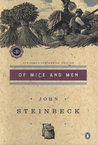
Of Mice and Men | A Review

Of Mice and MenOf Mice and Men by John Steinbeck

My rating: 3 of 5 stars

Brutality and tenderness interleaved. Sometimes a dog needs killing and the only mercy you can offer is being the one to pull the trigger.

View all my reviews

Walkaway by Cory Doctorow | A Review

Walkaway: A NovelWalkaway: A Novel by Cory Doctorow

My rating: 4 of 5 stars

Too often, our science fiction tells us easy stories of how technology, either misapplied or misunderstood, runs amok to enslave and debase humanity. The narrative arrow points directly from a relatively decent today to a dark, oppressive tomorrow. In these stories, technology is a malevolent character, presented as an external force that subjugates and depraves. Such science fiction, think the Matrix, calls upon a single woke hero to band with a small group of the oppressed to fight the power and restore light in the darkest hour. I used to enjoy this story. Call it the spectacle of despair.

Cory Doctorow’s Walkaway points the arrow the other way. Our present day is the dystopia and creative, generous communities of shared effort use technologies to make possible a better world.

The novel opens in a non-specific future that feels like the very near future, say next Tuesday. Post-scarcity technologies have solved problems of labor and distribution of goods. Food, clothes, shelter, and medicine are all readily available upon demand through a combination of 3D printing, biochemical alchemy and the wide scale distribution of scientific knowledge. Despite this, the richest continue to get exponentially richer while everyone else stays stuck. There’s no need for inequality except that the uber-rich, the “zotta rich”, need someway to perpetuate their specialness. They need to keep score. This status quo world is called Default, the intolerable made tolerable by an industry of mass distraction, a relentless flood of entertainments to placate the discontent. The disaffected drop off out of their dystopian lives by “walking away”, the term for leaving the life of consumerist consumption to join a loose network of makers building a post-capitalist, post-consumerist society.

The walk away world is utopian. Walk aways live in leaderless maker communities organized around the basic principle that people must use their talents as they see fit to make things better. Distributed information networks get the people, the tools and the resources to the right place at the right time. If someone screws up, someone else comes along to fix the problem. No blame. No credit. Just people doing meaningful work that matters.

Oh, and sex. There’s plenty of well-written sex, a rarity in science fiction. Believable without being smutty.

The premise of Walkaway is that the default conditions cannot be fought on their own terms. The only way to overcome them is to disengage, to walk away. When the walk aways discover the ability to copy and upload human consciousness into the Internet, they find the ultimate tool of resistance. A kind of digital life after death. Doctorow’s exploration of artificial intelligence and digital immortality is exquisitely rendered in its balance between humor and existential horror. This is a joyful, serious story.

Walkaway is Cory Doctorow’s best written book to date. He pushes further into themes of post-scarcity society, digital immortality and how finding the right work makes life meaningful. If you’ve read Doctorow’s Down and Out in the Magic Kingdom you will recognize these themes. They find fuller, more satisfying exploration here.

Highly recommended.

View all my reviews

Feed by M.T. Anderson (Review)

FeedFeed by M.T. Anderson

My rating: 5 of 5 stars

Feed by M.T. Anderson offers a dead accurate portrayal of our current moment dressed in the clothes of a dystopian science fiction future. This deceptively simple, clever story is the literary lovechild of The Great Gatsby and A Clockwork Orange. Anderson offers a unsettling critique of a society in decay that feels like today but is made strange and fresh through exuberant word play.

Feed is set in a future where everyone who matters is tied directly to the internet by a feed implanted when they are young. These fortunate kids are growing up in a world where marketers anticipate and cater to their smallest desires and where boredom and loneliness are never necessary. Except, of course, these kids are frequently bored, constantly dissatisfied and fearful the moment the feed goes quiet. Anderson gives us a generation of kids raised to fear boredom. Naturally, the pursuit of perpetual entertainment makes it harder and harder to keep boredom at bay.

I knew this book was something very special from the opening line: “We went to the moon to have fun, but the moon turned out to completely suck.”

I won’t spoil the story, except to say that our main character, Titus, predictably enough, falls in love with Violet, the weird loner girl who says awkward, true things and never seems quite to fit. I fell in love with Violet, too, which made this story all the more devastating. The story follows the relationship between Titus and Violet. Violet grew up in the world without the Feed and is trying to find a way to fit in.

Violet falls away from the Feed, and Titus is forced to decide in which world he wants to live. Like Nick in the Great Gatsby, Titus, struggles to become and remain self-aware while constantly yearning to fit completely in a culture organized against reflection and self-awareness. Titus is self-aware enough to sense that his internet-mediated life is missing something essential but he can’t quite figure out what that something is. There’s really no choice. He’s still a kid and the world is the world. Titus fails over and over, constantly struggling but coming up short. This was my senior year of high school.

Feed was published in 2002. I’m sure of this because I kept checking the publication date. I am astonished at how prescient this story is, written 5 years before the first iPhone, yet anticipating clearly our smart-phone obsessed, social media drenched lives. There is exuberant joy in the constant connection to friends, information, and entertainment, but the exuberance comes with a heavy price — distraction, vanity and, alas, the veneration of shared stupidity. Interspersed throughout are news dispatches about ecological disasters, riots over economic disparity and speeches from an American president who rallies the country with a program of nationalist consumerism. You probably know where this is going. We are consumers before we are citizens.

There are so many wonderful moments throughout this book. One of my favorite is Violet’s rant about the rapturous, life-changing wonders of Coca Cola. I have read few books that present such a clear-sighted picture of today dressed up like the distant future. Disorienting, disturbing and true. Must read.

View all my reviews

Fellside by M.R. Carey | Goodreads Review

FellsideFellside by M.R. Carey

My rating: 3 of 5 stars

A slow but rewarding build. Carey weaves several seemingly disparate, disjointed threads together into an ultimately satisfying resolution. I was most impressed by Carey’s ability to give physical, cinematic form to metaphysical concepts of dream and death. The story didn’t carry me along at first. I had to walk beside it. I was glad I did.

View all my reviews

Harry Potter and the 20 Year Spoiler Dodge

I finally read the Harry Potter series. This is ten years after most of my friends finished the series and twenty years after publication of the first book in the UK. As a librarian, not having read Harry Potter made me a kind of professional curiosity, a thing to be questioned and not entirely trusted. My lack of Hogwarts knowledge was a dark demerit on my professional credentials.

I gave the first two books a try 15 years ago, when everyone else in the world was reading about The  Boy Who Lived and You Know Who. I was unimpressed and set the series down after the first two books. Everybody I knew was reading and loving the books and yet, somehow, I believed I was not the target demographic. That was just me being hipster.

For twenty years, I managed to weave artfully through countless conversations with zealous Rowling apostles urging me to give the series just one more try. As if disliking these particular books was simply not possible. In these conversations, I listened patiently, acknowledged that, yes, something must be very wrong with me and moved on without gleaning too much about the actual plot or characters.

During this time, I also managed to see only the first movie adaptation which I actually enjoyed but never followed through to see the others.

This year, I decided to give it another go. My ten year old daughter doesn’t choose reading for fun. I hoped to inspire her by reading the series in parallel so we could get through it together and talk about it along the way. Her ten year old friends were all reading it too so I was sure this would work.

It didn’t. I ended up reading the series on my own.

And here’s the thing. I loved them. I now know what the rest of the world has known for years. The first books are charming but unchallenging. The series grows in complexity and quality with each book. The final three — Order of the Phoenix, Half-Blood Prince and Deathly Hallows — are among the best books I have ever read.

The series is astonishingly well-plotted. Minor details and characters from previous books emerge to become major plot points and characters in subsequent books. Everything has a place. Nothing is wasted. Important characters die. Main characters do stupid things. Villains gain depth. And the world of adults becomes increasingly complex as the children grow to understand more of how the world actually works.

I get it now. I admit I was wrong. The books are both magic-filled and magical. How much better to have been reading them with everyone else, so I could anguish along side my friends for the next book to land. And I missed out on a great opportunity to share the experience with my daughter.

And yet, despite the missed opportunities, I feel proud that while living in the Golden Age of Spoilers, I managed to read through the arc of Harry’s adventures unspoiled. I can’t quite explain how I managed it. It feels like a kind of magic requiring both the Cloak of Invisibility and the Marauder’s Map. I am the Boy Who Read Unspoiled. Robert Benson and the 20 year spoiler dodge.